Twelve Years on the Frontlines of Perinatal Care: Meet Crystal Davis, FamilyWell's Inagural Community Impact Scholarship Recipient
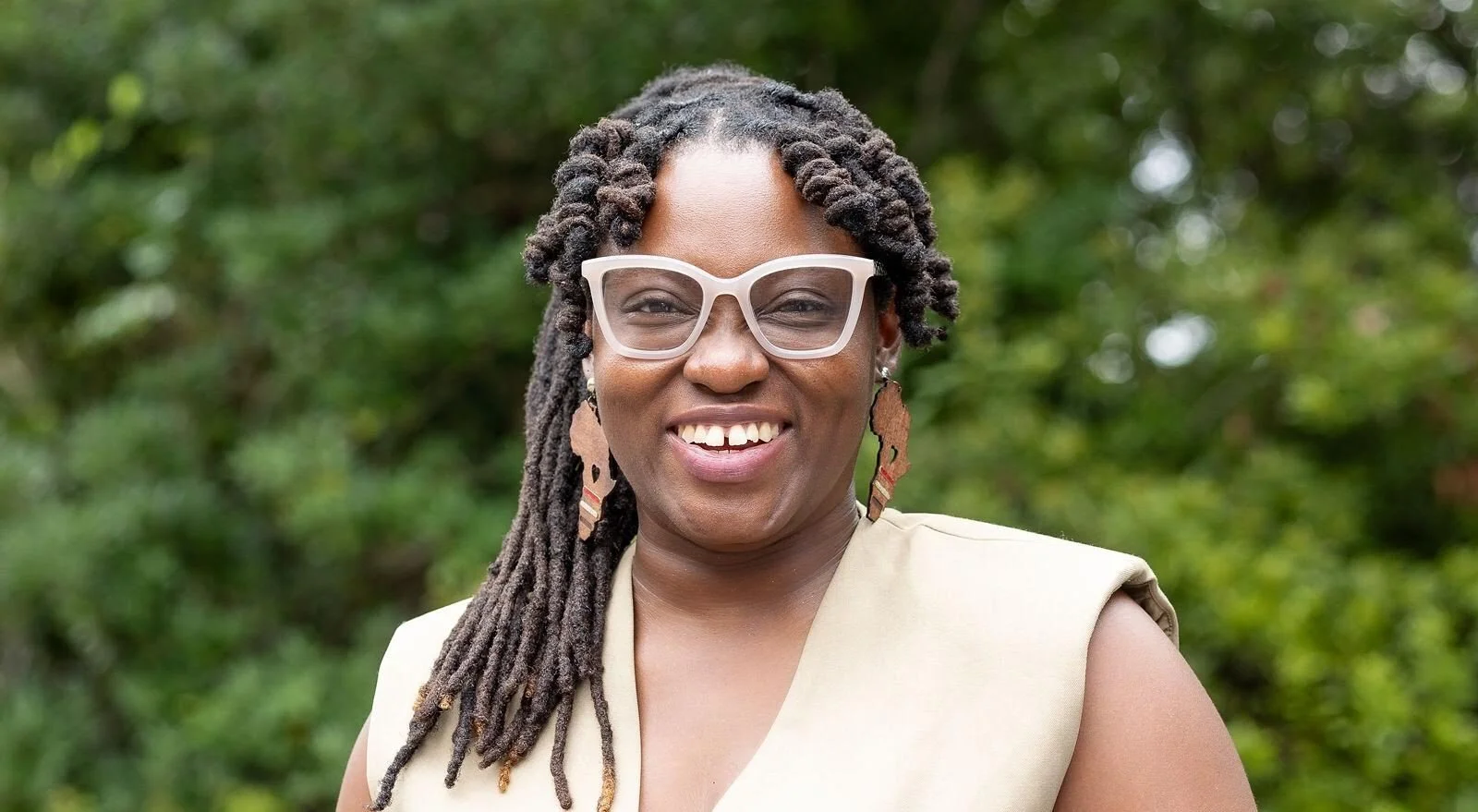
Crystal Davis-McFadden, FamilyWell PBH-C Community Impact Scholarship Recipient
Twelve years ago, Crystal Davis-McFadden started showing up for perinatal families in South Carolina. She has not stopped.
She is the Director of Parenting Programs at a nonprofit home visitation program, a certified postpartum doula, PMH-C certified, a support coordinator for Postpartum Support International, a board member for PSI South Carolina, and soon-to-be PBH-C Certified. She is also the founder and primary consultant at MaternaLink consulting, through which she provides culturally congruent consulting, peer support models, strategic facilitation, and mediation services that empower communities, healthcare systems, and organizations to create equitable, inclusive, and trauma-informed care environments. Twelve years in, she has built the kind of reputation that comes from being the person who shows up, the one colleagues call when they don't know how to start a hard conversation with a mom.
FamilyWell's Inaugural Community Impact Scholarship
This year, FamilyWell selected Crystal as one of two inaugural recipients of the PBH-C Community Impact Scholarship, a bi-annual award designed for people already doing meaningful work in perinatal mental health who are ready to go further. The scholarship is built around a simple premise: perinatal mental health support does not only happen in clinics. It happens in conversations, in community spaces, in moments of trust.
The individuals closest to that community perinatal support are often the closest to the families who need it most. Each cycle, two recipients receive full tuition to the Perinatal Behavioral Health Coaching Certification, access to live mentorship sessions with FamilyWell experts, and recognition across FamilyWell platforms. The scholarship is open to a wide range of professionals already supporting perinatal populations: doulas, community health workers, lactation consultants, peer supporters, therapists, nurses, and parents supporting other parents.
For Crystal, the PBH-C Community Impact Scholarship allows her to deepen the work she has already been doing for over a decade.
"Most of what I've done has been more part-time as far as postpartum support and perinatal mental health," she says. "Having access to this coaching program will help build up my skills and open other opportunities too."
When Home Visitors Reach Their Limit
Her full-time role puts her inside the homes of pregnant women and families with children under five. Over the past two years, she has watched the mental health needs of those moms grow sharper and harder to address. "We've had an uptick in pregnant moms enrolling in our program, but we've also seen an increase in mental health challenges or some type of crisis a mom is having," she says.
Her staff, home visitors rather than clinicians, weren't trained for that. Crystal became the person they came to with difficult questions: how to have hard conversations with a struggling mom, and what to do when she needed more than a visit could offer.
Crystal is clear about what it means when home visiting staff cannot offer exactly what a mom needs. It is not a failure of effort, but rather a structural problem. Moms who are isolated, often parenting alone, lean on their home visitors because there isn't anyone else. Those visitors want to help, but there is a limit. "The home visitor has to be honest," Crystal says. "'I want to be that support, I want to get you resources, but I'm not a professional, I can't support you in that mental health aspect.'"
The Fear That Keeps Moms Quiet
The situation carries a particular weight for Black mothers in South Carolina. Crystal names it directly. "There's a stigma around Black mamas' mental health and children. Here in South Carolina, there's real fear that if someone thinks something's wrong with you, or that you're not capable of caring for your children, they'll take your children away." That fear, she says, is not irrational. It keeps moms from saying anything at all.
Insurance compounds it further. Crystal recalls a mom who had to change her insurance plan just to access a free resource. She keeps a running list of organizations for when coverage falls short: the Loveland Foundation, BEAM, and local PSI chapters running free groups. Crystal shares she knows those names because she has had to know them to help her community fill gaps in the healthcare system.
Past the Six-Week OB Visit
One thing Crystal wants perinatal providers to sit with: the postpartum period does not end at six weeks.
"After that six-week appointment, you're still in that postpartum period. On paper it might say a year, but I'd say it can go up to two years, because your body is still adjusting and so is your sense of self." She sees moms skip that visit. Transportation gets in the way, or they feel fine, or they assume they don't need it because they've had a baby before. She still believes in that appointment. She wants both providers and families to treat the recovery window as longer, and the follow-up as ongoing.
"The mental health aspect of that can show up at any point along the way, even during pregnancy."
Educating from the Community Up
Crystal's approach to lasting change is grounded in community education as much as systems advocacy, and she sees them as working in tandem. She has facilitated ACTT training, created specifically for Black mothers, through the Black Coalition for Safe Motherhood. ACTT stands for: Ask questions until you understand the answers, Claim your space, Trust your body, Tell your story. The framework is built for pregnant women and their support people. Crystal uses it as a model for how informed families push back on providers who aren't listening.
"If we're preparing moms and preparing families, they know what to ask, they know how to advocate, and they know what to look for. They can be persistent with healthcare providers and say, 'I am my own expert on my body, I know what's going on, I know something's different.'"
After almost twelve years of this work, she keeps arriving at the same place.
"That's where I keep landing," she says. "On the need to educate moms and their support systems."
The PBH-C certification gives her more tools to bring back to the community she has always been rooted in. That is the point of the scholarship: to reach professionals already doing this work, who are ready to do more of it.
Crystal’s Favorite Books for Perinatal Parents
Oh Sis, You're Pregnant! The Ultimate Guide to Black Pregnancy & Motherhood by Shanicia Boswell
The Parental Leave Playbook by Amy Beacon & Sue Campbell
The Expectant Father: The Ultimate Guide for Dads-to-Be by Armin A. Brott & Jennifer Ash Rudick
Mothering the Mother: African American Postpartum Traditions, Recipes, and Healing by Shafia Monroe
Crystal is one of two inaugural recipients of FamilyWell's Community Impact Scholarship. Our second scholarship spotlight is coming soon.
The scholarship supports professionals working in perinatal mental health who are looking to expand their skills and reach. To learn more about the PBH-C program or future scholarship cycles, visit familywellhealth.com/academy.